Mechanic’s liens aren’t about auto repair—they’re legal claims a contractor, subcontractor, or supplier can place on a property if they haven’t been paid for labor or

Dated: September 28 2026
Views: 1
Mechanic’s liens aren’t about auto repair—they’re legal claims a contractor, subcontractor, or supplier can place on a property if they haven’t been paid for labor or materials. For homeowners in Charlottesville, these liens can impact your home even if you’ve already paid your general contractor.
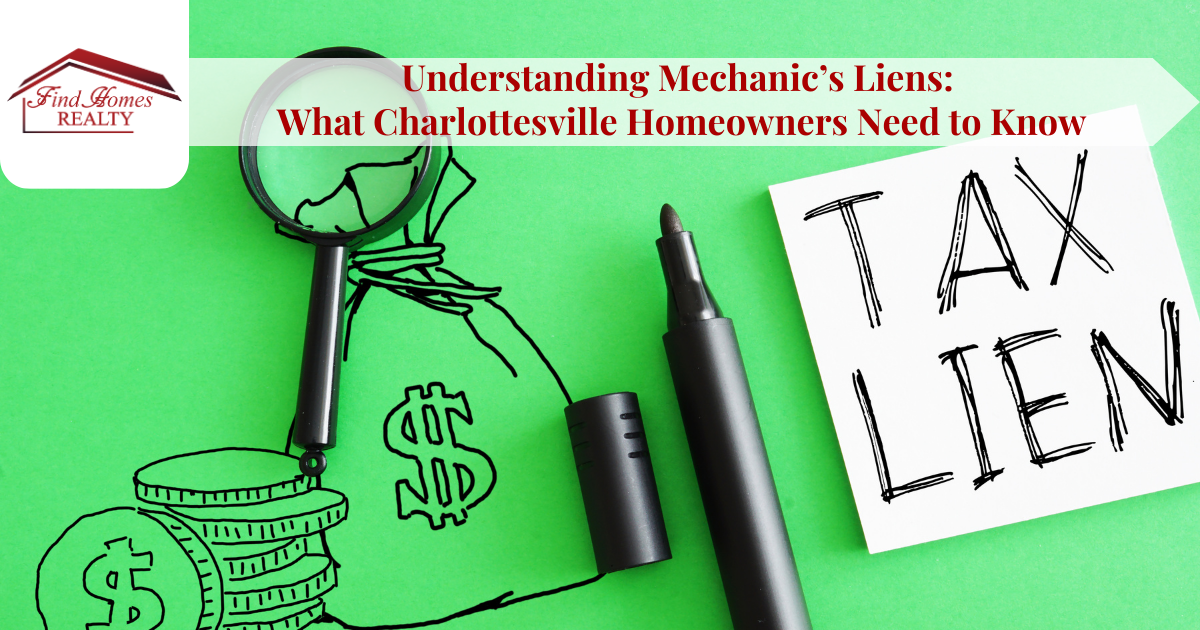
If your contractor fails to pay a subcontractor or supplier, that party can file a mechanic’s lien on your house. This means as a homeowner, you could be responsible for payments you assumed were covered. For example, paying your contractor doesn’t automatically protect you if they don’t pay the tradespeople or material providers working on your home improvement project.
Virginia law requires that contractors, subcontractors, or suppliers notify homeowners of their contribution to a project, usually within 20–30 days of providing labor or materials. If payment isn’t received, they can file a claim in the county where the property is located.
Once a claim is filed, the lienholder typically has two to six months to resolve the payment or initiate a lawsuit. Even if no lawsuit occurs, clearing a lien through the court is crucial, especially if you plan to sell or refinance your Charlottesville home.
Homeowners often ask why they could be responsible for a lien caused by a contractor who didn’t pay others. Legally, the priority is protecting the workers and suppliers who improved your property. You may have recourse against the contractor through a lawsuit, but it can take time and resources to recover funds.
Even general contractors can file liens in Virginia, so proper documentation and legal precautions are important. If a lien already exists on your property, it could prevent refinancing, taking out a loan, or selling your home.
If you have a mechanic’s lien on your home or want to avoid potential issues, speaking with a real estate attorney in Charlottesville is recommended. Consulting a legal professional before starting major home renovations can help ensure you’re protected.
Understanding mechanic’s liens is key for homeowners in Charlottesville who are investing in remodeling, new construction, or home improvements. By being proactive, you can safeguard your property and your finances while keeping your projects on track.
Learn more about protecting your home and navigating real estate challenges in Charlottesville on the Find Homes Realty blog.
We provide our clients with more than just the assistance in finding or selling a property. Caring for our clients and keeping their best interests at heart is what we do best. We represent our client....
Mechanic’s liens aren’t about auto repair—they’re legal claims a contractor, subcontractor, or supplier can place on a property if they haven’t been paid for labor or
Many renters in Charlottesville dream of owning a home, yet it can feel out of reach. But new research shows the biggest barrier might not be desire—it’s misinformation about what&rsquo
Kitchen design trends continue to evolve, and one of the most noticeable changes in recent years is the rise of colored kitchen cabinets. While traditional kitchens often feature white cabinets or
When preparing to sell a property, homeowners often ask whether home staging is truly worth the effort and expense. Some sellers view staging as unnecessary, while others see it as a strategic
 Charlottesville Area Association of REALTORS® All information deemed reliable but not guaranteed. All properties are subject to prior sale, change or withdrawal. Neither listing broker(s) or information provider(s) shall be responsible for any typographical errors, misinformation, misprints and shall be held totally harmless. Listing(s) information is provided for consumer's personal, non-commercial use and may not be used for any purpose other than to identify prospective properties consumers
may be interested in purchasing. The data relating to real estate for sale on this website comes in part from the Internet Data Exchange program of the Multiple Listing Service. Real estate listings held by brokerage firms other than Find Homes Realty may be marked with the Internet Data Exchange logo and detailed information about those properties will include the name of the listing broker(s) when required by the MLS. Copyright ©2026 All rights reserved.
Last Updated: September 28, 2026 5:29 PM UTC
Show More...
Charlottesville Area Association of REALTORS® All information deemed reliable but not guaranteed. All properties are subject to prior sale, change or withdrawal. Neither listing broker(s) or information provider(s) shall be responsible for any typographical errors, misinformation, misprints and shall be held totally harmless. Listing(s) information is provided for consumer's personal, non-commercial use and may not be used for any purpose other than to identify prospective properties consumers
may be interested in purchasing. The data relating to real estate for sale on this website comes in part from the Internet Data Exchange program of the Multiple Listing Service. Real estate listings held by brokerage firms other than Find Homes Realty may be marked with the Internet Data Exchange logo and detailed information about those properties will include the name of the listing broker(s) when required by the MLS. Copyright ©2026 All rights reserved.
Last Updated: September 28, 2026 5:29 PM UTC
Show More...
 © BRIGHT, All Rights Reserved
Information Deemed Reliable But Not Guaranteed
The data relating to real estate for sale on this website appears in part through the BRIGHT Internet Data Exchange program, a voluntary cooperative exchange of
property listing data between licensed real estate brokerage firms in which
participates, and is provided by BRIGHT through a licensing agreement.
The information provided by this website is for the personal,
non-commercial use of consumers and may not be used for any purpose other than to identify prospective properties consumers may be interested in purchasing.
Data last updated: September 28, 2026 2:24 PM UTC
Some properties which appear for sale on this website may no longer be available
because they are under contract, have Closed or are no longer being offered for sale.
Some real estate firms do not participate in IDX and their listings do not appear on this website. Some properties listed with participating firms do not appear on this website at the request of the seller.
Show More...
 All information deemed reliable but not guaranteed. All properties are subject to prior sale, change or withdrawal. Neither listing broker(s) or information provider(s) shall be responsible for any typographical errors, misinformation, misprints and shall be held totally harmless. Listing(s) information is provided for consumer's personal, non-commercial use and may not be used for any purpose other than to identify prospective properties consumers may be interested in purchasing. The data relating
to real estate for sale on this website comes in part from the Internet Data Exchange program of the Multiple Listing Service. Real estate listings held by brokerage firms other than Find Homes Realty may be marked with the Internet Data Exchange logo and detailed information about those properties will include the name of the listing broker(s) when required by the MLS. Copyright ©2026 All rights reserved.
Last Updated: September 28, 2026 1:55 PM UTC
Show More...
All information deemed reliable but not guaranteed. All properties are subject to prior sale, change or withdrawal. Neither listing broker(s) or information provider(s) shall be responsible for any typographical errors, misinformation, misprints and shall be held totally harmless. Listing(s) information is provided for consumer's personal, non-commercial use and may not be used for any purpose other than to identify prospective properties consumers may be interested in purchasing. The data relating
to real estate for sale on this website comes in part from the Internet Data Exchange program of the Multiple Listing Service. Real estate listings held by brokerage firms other than Find Homes Realty may be marked with the Internet Data Exchange logo and detailed information about those properties will include the name of the listing broker(s) when required by the MLS. Copyright ©2026 All rights reserved.
Last Updated: September 28, 2026 1:55 PM UTC
Show More...
