Hosting an open house can be one of the most effective ways to attract potential buyers and generate interest in your property. By allowing multiple visitors to tour the home at once, sellers often

Dated: August 5 2026
Views: 15
For years, one of the biggest frustrations for homebuyers has been competing against large institutional investors with deep pockets. Cash offers, bulk purchases, and corporate ownership have made it increasingly difficult for everyday Americans to buy a home in many markets.
Now, Congress has taken a significant step toward addressing that issue.
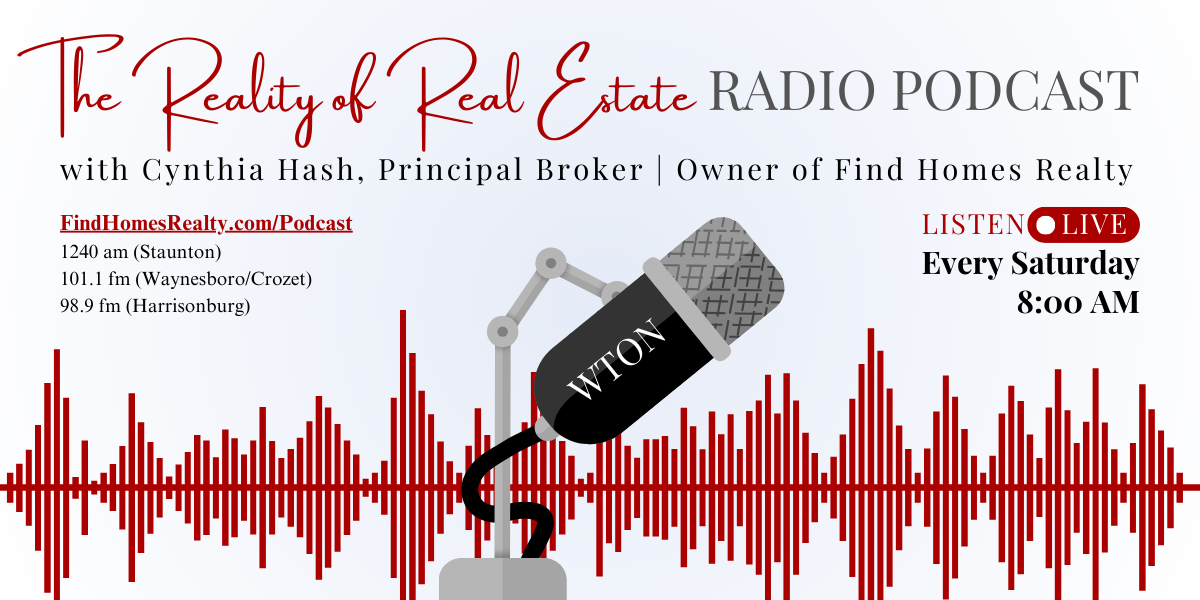
In Episode 94 of The Reality of Real Estate, Cynthia Hash and Joe Thomas discuss the latest developments surrounding the 21st Century ROAD to Housing Act, why it has received overwhelming bipartisan support, and what it could mean for homebuyers, small investors, and the future of affordable housing.
Housing affordability has become one of the few issues capable of bringing lawmakers together.
The House overwhelmingly approved the 21st Century ROAD to Housing Act with a remarkable 396-13 bipartisan vote, signaling broad agreement that housing affordability deserves immediate attention.
While the House and Senate must still reconcile differences between their respective versions before the legislation reaches the President, the message from Congress is unmistakable:
Housing affordability has become a national priority.
The legislation tackles several housing challenges at once by focusing on increasing housing supply while limiting the influence of the nation's largest institutional investors.
Among its major provisions, the bill would:
This cap specifically targets massive corporate investors—not local landlords or families building long-term wealth through real estate.
One of the biggest misconceptions surrounding the legislation is that it somehow hurts small investors.
It doesn't.
If you own:
You are not the target of this legislation.
The bill is aimed squarely at institutional investment firms that own hundreds or even thousands of single-family homes across multiple markets.
Companies operating on the scale of firms like Blackstone and Invitation Homes have purchased enormous amounts of housing inventory over the past decade, particularly in fast-growing metropolitan areas.
Those large-scale acquisitions have made it harder for ordinary buyers to compete, especially first-time homebuyers.
When institutional investors purchase large numbers of homes with cash offers, they often outcompete families relying on traditional financing.
Reducing that competition could help create:
While it won't solve every affordability challenge overnight, it represents one of the first federal efforts to directly address institutional ownership of single-family housing.
While Cynthia supports many aspects of the legislation, she believes Congress missed an opportunity to address another major affordability issue affecting many buyers today.
That issue involves unwarrantable condominiums.
Many affordable condominium communities become "unwarrantable" because they no longer meet conventional lending guidelines.
This often happens when:
When that occurs, buyers lose access to many traditional financing options.
Instead of qualifying for competitive conventional or FHA loans, purchasers may be forced into loans requiring:
For many first-time buyers, that can make homeownership nearly impossible.
Cynthia recently worked with a buyer purchasing a condominium in a community that had become unwarrantable.
Because of the property's financing limitations, the buyer had to:
Meanwhile, the homeowners association had fallen behind on maintaining common areas, decks, and other shared property—one of the very issues contributing to the financing restrictions.
These are exactly the types of affordable homes that many first-time buyers should be able to purchase.
Instead, financing barriers often make them inaccessible.
Cynthia believes Congress should also modernize FHA lending rules for condominium communities.
Reducing unnecessary regulatory hurdles—while still protecting buyers from financially unstable developments—could open the door for thousands of first-time purchasers who otherwise cannot qualify.
At the same time, limiting excessive investor ownership within condominium communities would help preserve these neighborhoods as opportunities for owner-occupants rather than large-scale rental operations.
Affordable housing isn't just about building new homes. Sometimes it's about making existing homes easier to finance.
Although the House has passed its version of the bill, the Senate approved a different version containing stricter language affecting institutional investors.
The two chambers must now reconcile those differences before the final legislation heads to the President.
Most housing analysts expect some version of the legislation to become law, with broad bipartisan support providing significant momentum.
Regardless of the final wording, the conversation in Washington has clearly shifted toward encouraging homeownership while limiting excessive concentration of housing inventory among the nation's largest investment firms.
The 21st Century ROAD to Housing Act won't solve America's housing shortage by itself.
However, it represents an important acknowledgment that housing affordability requires action on multiple fronts—from increasing housing supply to reducing barriers for everyday buyers.
As Cynthia Hash explains, protecting opportunities for first-time buyers means more than simply limiting institutional investors. It also means making affordable financing available for existing housing, including condominium communities that too often fall through the cracks.
Helping more families achieve homeownership ultimately strengthens neighborhoods, builds long-term wealth, and creates healthier housing markets for everyone.
Want to hear the full discussion?
In Episode 94 of The Reality of Real Estate, Cynthia Hash and Joe Thomas break down the latest developments surrounding the 21st Century ROAD to Housing Act, discuss what the legislation means for buyers and investors, and explain why condominium financing reform should be part of the national conversation on housing affordability.
Whether you're purchasing your first home, investing in real estate, or preparing to sell, having experienced local guidance can make all the difference.
Find Homes Realty is committed to helping buyers and sellers throughout Central Virginia navigate today's changing real estate market with confidence.
Contact Find Homes Realty today to discuss your real estate goals and discover how expert representation can help you succeed.

We provide our clients with more than just the assistance in finding or selling a property. Caring for our clients and keeping their best interests at heart is what we do best. We represent our client....
Hosting an open house can be one of the most effective ways to attract potential buyers and generate interest in your property. By allowing multiple visitors to tour the home at once, sellers often
When preparing to buy a home, choosing the right mortgage can be just as important as choosing the right property. Some buyers work directly with banks or mortgage lenders, while others turn to
Many homebuyers are familiar with conventional, FHA, and VA mortgages, but fewer people realize that the United States Department of Agriculture also offers a home loan program designed to make
Planning a home improvement project can be exciting, but one important step homeowners often overlook is determining whether a building permit is required. Permit regulations can sometimes feel
 Charlottesville Area Association of REALTORS® All information deemed reliable but not guaranteed. All properties are subject to prior sale, change or withdrawal. Neither listing broker(s) or information provider(s) shall be responsible for any typographical errors, misinformation, misprints and shall be held totally harmless. Listing(s) information is provided for consumer's personal, non-commercial use and may not be used for any purpose other than to identify prospective properties consumers
may be interested in purchasing. The data relating to real estate for sale on this website comes in part from the Internet Data Exchange program of the Multiple Listing Service. Real estate listings held by brokerage firms other than Find Homes Realty may be marked with the Internet Data Exchange logo and detailed information about those properties will include the name of the listing broker(s) when required by the MLS. Copyright ©2026 All rights reserved.
Last Updated: September 9, 2026 7:18 PM UTC
Show More...
Charlottesville Area Association of REALTORS® All information deemed reliable but not guaranteed. All properties are subject to prior sale, change or withdrawal. Neither listing broker(s) or information provider(s) shall be responsible for any typographical errors, misinformation, misprints and shall be held totally harmless. Listing(s) information is provided for consumer's personal, non-commercial use and may not be used for any purpose other than to identify prospective properties consumers
may be interested in purchasing. The data relating to real estate for sale on this website comes in part from the Internet Data Exchange program of the Multiple Listing Service. Real estate listings held by brokerage firms other than Find Homes Realty may be marked with the Internet Data Exchange logo and detailed information about those properties will include the name of the listing broker(s) when required by the MLS. Copyright ©2026 All rights reserved.
Last Updated: September 9, 2026 7:18 PM UTC
Show More...
 © BRIGHT, All Rights Reserved
Information Deemed Reliable But Not Guaranteed
The data relating to real estate for sale on this website appears in part through the BRIGHT Internet Data Exchange program, a voluntary cooperative exchange of
property listing data between licensed real estate brokerage firms in which
participates, and is provided by BRIGHT through a licensing agreement.
The information provided by this website is for the personal,
non-commercial use of consumers and may not be used for any purpose other than to identify prospective properties consumers may be interested in purchasing.
Data last updated: September 9, 2026 3:29 PM UTC
Some properties which appear for sale on this website may no longer be available
because they are under contract, have Closed or are no longer being offered for sale.
Some real estate firms do not participate in IDX and their listings do not appear on this website. Some properties listed with participating firms do not appear on this website at the request of the seller.
Show More...
 All information deemed reliable but not guaranteed. All properties are subject to prior sale, change or withdrawal. Neither listing broker(s) or information provider(s) shall be responsible for any typographical errors, misinformation, misprints and shall be held totally harmless. Listing(s) information is provided for consumer's personal, non-commercial use and may not be used for any purpose other than to identify prospective properties consumers may be interested in purchasing. The data relating
to real estate for sale on this website comes in part from the Internet Data Exchange program of the Multiple Listing Service. Real estate listings held by brokerage firms other than Find Homes Realty may be marked with the Internet Data Exchange logo and detailed information about those properties will include the name of the listing broker(s) when required by the MLS. Copyright ©2026 All rights reserved.
Last Updated: September 9, 2026 4:51 PM UTC
Show More...
All information deemed reliable but not guaranteed. All properties are subject to prior sale, change or withdrawal. Neither listing broker(s) or information provider(s) shall be responsible for any typographical errors, misinformation, misprints and shall be held totally harmless. Listing(s) information is provided for consumer's personal, non-commercial use and may not be used for any purpose other than to identify prospective properties consumers may be interested in purchasing. The data relating
to real estate for sale on this website comes in part from the Internet Data Exchange program of the Multiple Listing Service. Real estate listings held by brokerage firms other than Find Homes Realty may be marked with the Internet Data Exchange logo and detailed information about those properties will include the name of the listing broker(s) when required by the MLS. Copyright ©2026 All rights reserved.
Last Updated: September 9, 2026 4:51 PM UTC
Show More...
